


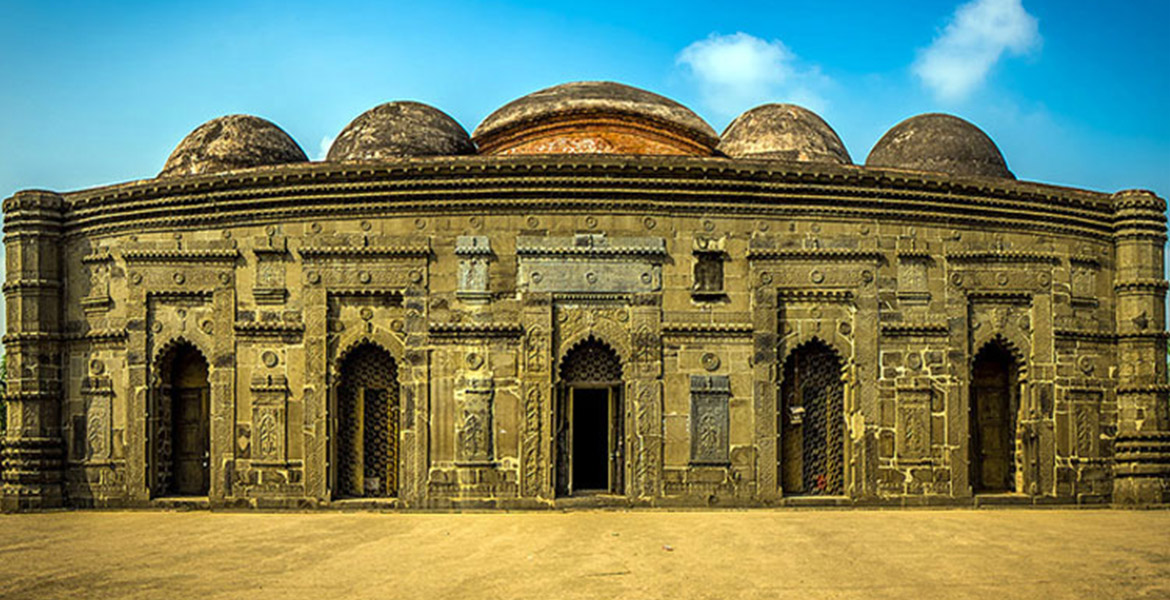
Nestled in the historic landscape of Chapai Nawabganj in the Rajshahi Division, the Choto Sona Mosque, also known as the Small Golden Mosque, stands as a timeless emblem of Bengal’s Sultanate heritage. Revered for its architectural brilliance, this mosque is a testament to the rich cultural and spiritual history of the region.
A Glimpse into History
Constructed between 1493 and 1519 during the reign of Sultan Alauddin Husain Shah, the Choto Sona Mosque showcases the extraordinary craftsmanship of the Bengal Sultanate period. Its solid brick walls and intricate terracotta decorations exemplify the aesthetic sophistication and devotion of its creators. Once adorned with gleaming golden domes — which inspired its name — the mosque remains a remarkable example of historical Islamic architecture in Bangladesh.
Architectural Marvel
The mosque’s design reflects a harmonious blend of form and function. Featuring multiple domes, thick brick walls, and finely detailed stone and terracotta embellishments, it captures the grandeur of the Sultanate era. Its symmetrical structure, ornate facades, and carefully proportioned prayer hall make it not only a place of worship but also a masterpiece of art and architecture.
Cultural Significance
Beyond its architectural splendor, the Choto Sona Mosque serves as a symbol of the region’s enduring spiritual and cultural heritage. Known as a “gem of Gaur,” it continues to attract historians, architects, and visitors seeking to connect with the legacy of medieval Bengal. The mosque’s serene surroundings and historical aura offer a reflective space, inviting visitors to appreciate both its beauty and its place in Bangladesh’s cultural narrative.
Preservation and Legacy
Today, the mosque is protected by the Department of Archaeology and remains one of the best-preserved monuments of the Sultanate period. Its enduring presence not only preserves the memory of a remarkable era but also inspires future generations to value history, artistry, and faith.
A visit to the Choto Sona Mosque is more than a journey through stone and terracotta; it is an exploration of Bengal’s rich past, a celebration of its architectural genius, and an invitation to experience the timeless elegance of one of Bangladesh’s most treasured historical landmarks.