


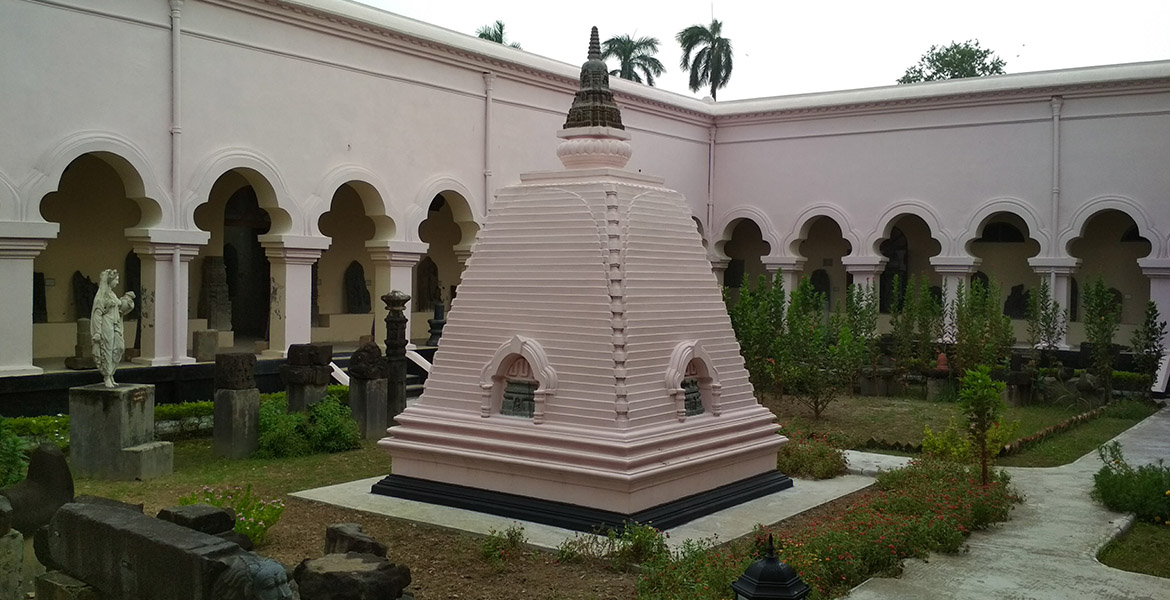
In the historic heart of Rajshahi, the Varendra Research Museum rises as a venerable custodian of Bengal’s past, a place where every artifact tells a tale of art, faith, and culture spanning the centuries.
The Origins of Varendra Research Museum
The museum was established in 1910 through the initiative of visionary scholars and patrons, including Sarat Kumar Ray, a zamindar of the Dighapatia royal family of Natore; Akshay Kumar Maitra, a lawyer; and Ramaprasad Chanda, a teacher at Rajshahi Collegiate School. Driven by a passion to collect and preserve Bengal’s cultural and historical artifacts, they founded the Varendra Research Society, conducting excavations and gathering rare items from across Rajshahi. By the end of their initial survey, 32 invaluable artifacts had been collected, prompting the construction of a dedicated museum building on land donated by Sarat Kumar Ray. Completed in 1913, the museum was officially inaugurated on 13 November of the same year by the then Governor of Bengal, Lord Carmichael.
In 1911, the Kolkata Museum attempted to claim the artifacts, but thanks to the efforts of Governor Carmichael, a government decree in 1913 granted the Varendra Museum full authority to maintain and preserve its collection. Over the years, the museum collaborated with Kolkata University to excavate the Paharpur Buddhist Vihara in Naogaon, uncovering 256 significant artifacts. Following the country’s independence in 1947, the museum faced challenges, including temporary use of part of its building by a medical school. In 1964, to safeguard its collection, the museum and all its movable and immovable assets were formally acquired by Rajshahi University, ensuring its continuity as a centre of learning and preservation. Over the decades, it has welcomed visitors including Mahatma Gandhi, Netaji Subhas Chandra Bose, and numerous scholars and dignitaries.
A Repository of History
Today, the Varendra Research Museum houses over 9,000 artifacts, representing civilizations from thousands of years ago. Its collections include relics from the Indus Valley Civilization, stone sculptures, Buddhist statues from the 11th century, and countless other treasures such as the head of Bhairava, depictions of Ganga, and Mughal-era silver coins. Notable items include coins from Emperor Chandragupta and Emperor Shah Jahan, as well as paintings and manuscripts spanning the Pala period to the Muslim era. The museum’s library holds over 12,000 manuscripts, including 3,646 in Sanskrit and the remainder in Bengali, offering invaluable resources for researchers and historians.
Exhibitions and Galleries
The museum’s vast collection is thoughtfully organized into seven exhibition galleries:
The first gallery displays 256 artifacts excavated from Paharpur in Naogaon.
The second showcases Hindu and Buddhist sculptures carved from wood and stone.
The third and fourth galleries house statues of various deities.
The fifth gallery is dedicated to Buddhist sculptures.
The sixth gallery exhibits inscribed stone fragments in multiple languages.
The seventh gallery preserves artifacts from indigenous communities.
Each gallery offers visitors an immersive journey through the rich and diverse cultural history of Bengal, celebrating artistic mastery, spiritual devotion, and the ingenuity of past civilizations.
Preserving a Living Legacy
The Varendra Research Museum is not merely a repository of artifacts; it is a living testament to the heritage of Bengal. Through careful preservation, research, and exhibitions, the museum continues to inspire scholars, students, and the public alike. Every sculpture, coin, manuscript, and relic tells a story — of kingdoms, religions, artists, and communities that shaped the region.
Conclusion
A visit to the Varendra Research Museum is a journey through time. Wandering through its galleries, one becomes part of a timeless tradition of discovery, learning, and reverence for history. The museum stands as a beacon of knowledge, a guardian of culture, and a tribute to the enduring legacy of Bengal’s past, bridging centuries and connecting generations with the richness of human civilisation.